
case study
How a Toronto Bath Showroom Closed $600K During COVID Lockdowns
TUBS opened its 30,000 sq ft Toronto floor to the world during COVID. $600K in three months, a single $80K-to-$250K US sale, 20,000+ lifetime impressions — five years on, still selling.

Ravi Mundi
Founder · June 19, 2026
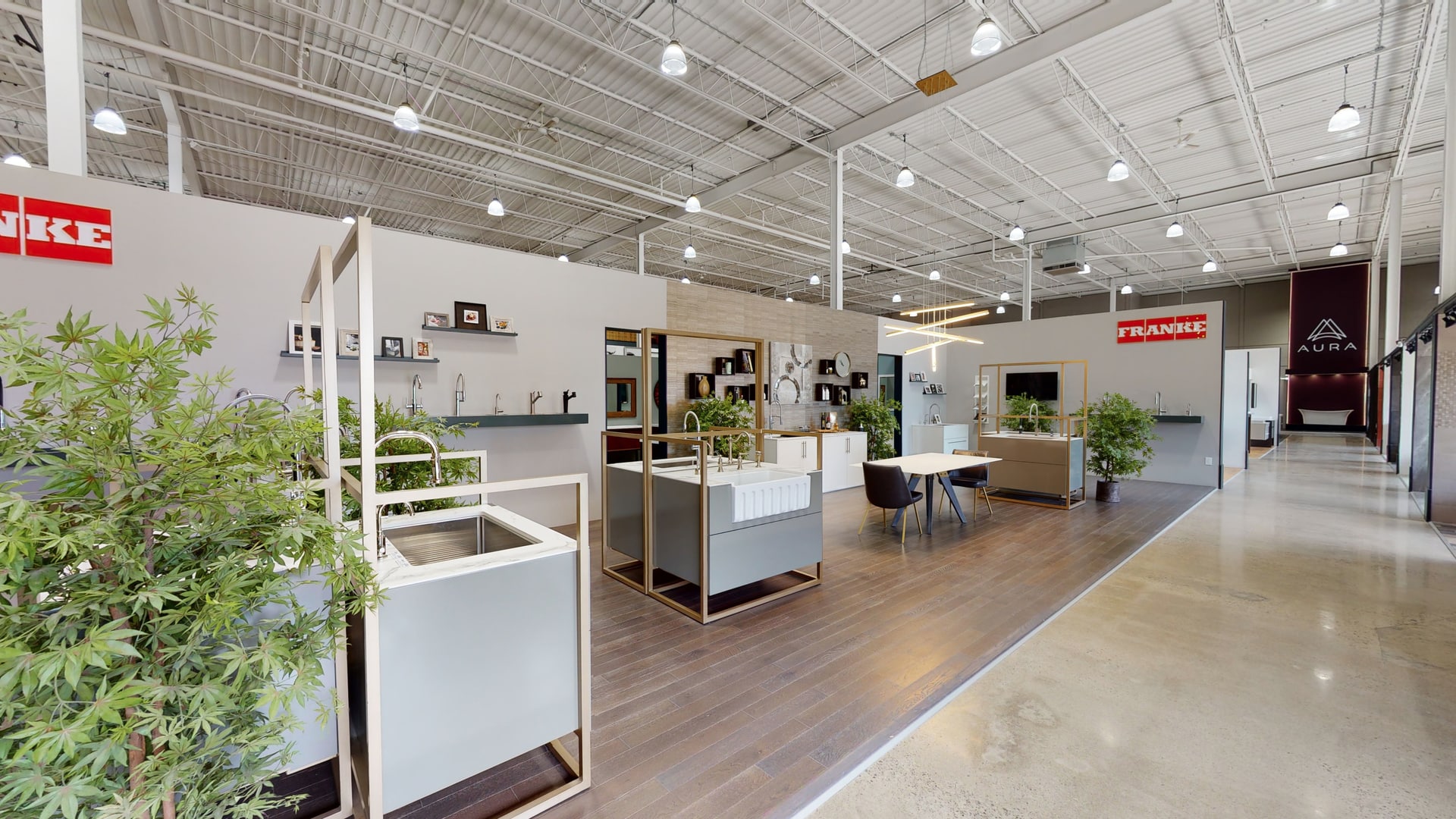
If you want a concrete answer to what does a virtual showroom actually generate in revenue? — this is the case study. TUBS is a 30,000 sq ft bath and plumbing showroom in Toronto representing more than a dozen premium brands. When COVID lockdowns forced the floor to close for months at a time, the virtual tour we built kept selling. The numbers from those first months are still the proof point I show every showroom client considering the same investment.
The COVID context
Lockdowns are the obvious story, but the underlying problem TUBS faced is bigger than COVID. A high-touch premium retail experience — the kind where designers walk the floor with their clients and trade buyers shortlist a tub on a Tuesday afternoon — depends on the floor being walkable. When the floor isn’t accessible, the entire sales motion stops.
Closing for months at a time during the early lockdowns wasn’t a marketing problem for TUBS. It was a revenue problem.
The build — a fully tagged virtual showroom
The tour we built was one of the only fully virtual online bathroom showrooms in the world at the time. It had:
- A walkable 3D capture of the entire 30,000 sq ft floor — inside view, floor plan, and dollhouse view, each navigable
- A mini-map for orientation so buyers always knew where they were on a floor of this size
- A searchable product directory organised by brand, with chips along the top for TOTO, Neptune, Dimplex, Zomodo, Vanico, Fairmont, Rubi, Fluerco, Franke, House of Rohl, Masco, Aura, Kohler, AD Waters, Rubinet
- Product tags on every displayed fixture, each anchored in 3D space to the actual item on the floor
- Ultra-tier tags on selected products with the full media bundle — spec sheet PDFs, install manuals, install videos, 3D model previews, buy-now links
The tour stayed open 24 hours a day from any device anywhere in the world.
Tags vs no tags — the difference
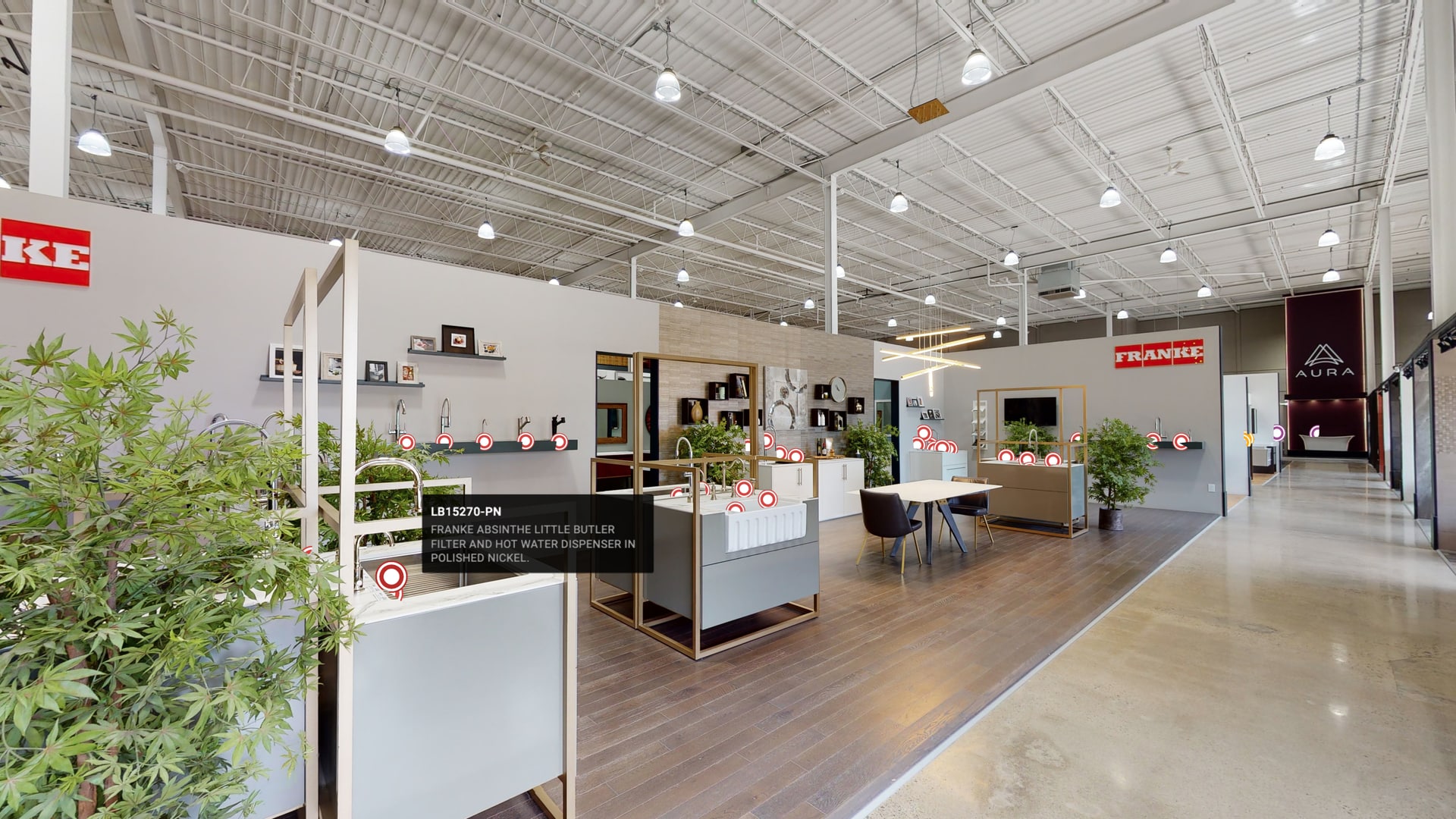
A spec sheet on a website isn’t the same as a tagged spec sheet anchored to the fixture in a walkable tour. The first is a document you have to know to ask for. The second is a layer on top of the experience the buyer is already in.
The numbers
This is what makes the case study repeatable. TUBS closed:
- $600K+ in net-new business in the first three months of the tour going live during lockdown
- One $80K sale from a US client — a buyer outside Ontario TUBS could not have reached through the brick-and-mortar floor — that grew to over $250K in revenue from the same client in year one
- 5,000 impressions in the tour’s first year
- 20,000+ lifetime impressions and 17,500+ views as of today — a tour built in 2020 is still pulling new buyer traffic five years later

The US client story is the one I tell most often
A buyer in the United States — a market TUBS had no realistic way to serve from a Toronto showroom — found the tour during lockdown. Walked it. Picked out fixtures. Asked questions over email. Bought $80,000 of product without ever flying to Toronto. Within a year, that single relationship had grown to over $250K.
That sale doesn’t happen without the tour. The brick-and-mortar floor is invisible to a buyer in Chicago. The virtual floor is one search away.
Why this scales beyond TUBS
The COVID context is now in the past. The structural insight isn’t.
If your premium showroom serves a buying audience that can’t always walk in — designers booked into project deadlines, trade buyers with travel budgets, end customers more than an hour away, or out-of-province clients who would never come in person — the virtual tour is the floor for that audience. The brick-and-mortar floor sells the local market. The virtual floor sells the rest.
See the tour
Walk the TUBS Virtual Showroom case study. Use the search bar in the product directory. Open a tagged fixture. The tour is a working sales channel, not a marketing tour.
If you run a premium retail showroom in the GTA or Southern Ontario and you want a virtual floor that sells when the brick-and-mortar floor is closed — get a quote or book a 15-minute scoping call.
- #case-study
- #virtual-showroom
- #retail
- #covid
- #toronto
- #product-tagging